
Baby Reflux, Crying & Poor Weight Gain: Who to See and When (Australia Guide)
When your baby won’t settle — and you’re not sure what to do next
If your baby is crying more than expected, struggling with feeds, or not gaining weight as you hoped, it can feel incredibly overwhelming.
What makes it harder is not always knowing:
Is this normal?
Am I overreacting?
Who should I actually go to for help?
Many parents are told to “wait and see” — but when things don’t improve, the uncertainty can quickly build.

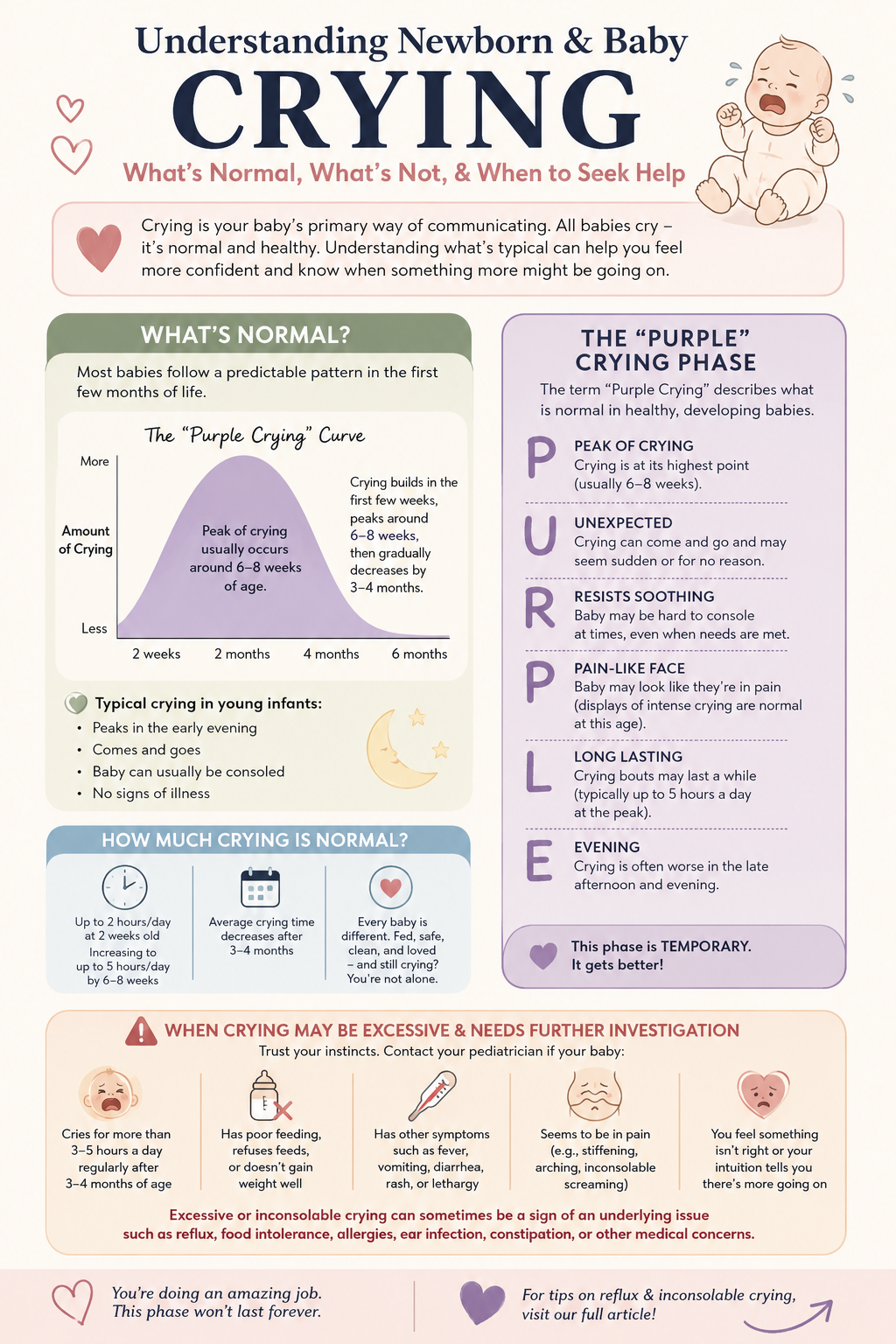
What is considered “normal” crying?
All babies cry — especially in the first few months.
In general:
Crying tends to peak around 6–8 weeks of age
Many babies cry up to 2–3 hours per day in early infancy
Periods of fussiness (especially in the evening) are common
However, some patterns may suggest your baby needs additional support:
Crying that is prolonged, inconsolable, or escalating
Frequent discomfort during or after feeds
Arching, stiffening, or distress when lying flat
Poor or slow weight gain
Feeding difficulties or refusal
You don’t need to determine exactly what is causing this —
👉 but you do need the right support around you to help work it out.
Step 1: Start with your GP or Child Health Nurse
In Australia, your first step is usually:
Your GP (General Practitioner)
Or your Child Health Nurse
They can:
Assess growth and feeding patterns
Check for common causes of discomfort
Provide initial strategies to try at home
Guide you on whether further support is needed
If things improve — that’s reassuring.
If not, this is where many parents feel stuck.
When things aren’t improving — what next?
This is the part that often isn’t explained clearly.
There isn’t just one next step — there are different types of support depending on what’s going on.
👉 If you’re already feeling like your concerns aren’t being taken seriously, this guide may help you navigate next steps:
[What To Do When You Feel Like No One Is Listening in Hospital (Australia Guide)]
Who can help — and what they actually do

Understanding this is key.
IBCLC (Lactation Consultant)
Best for:
Breastfeeding challenges
Latch issues
Supply concerns
Feeding pain or inefficiency
assessment for oral ties
👉 They focus on how your baby feeds
Dietitian
Best for:
Concerns about intake or growth
Formula feeding support
Nutritional optimisation
suspected CMPI or food allergy
👉 They focus on what your baby is getting
Speech Pathologist
Best for:
Oral motor difficulties
Suck-swallow coordination issues
Feeding aversion or fatigue
👉 They focus on how your baby physically manages feeding
GP (ongoing review)
Your GP continues to:
Monitor growth and symptoms
Trial medications if appropriate
Coordinate referrals and engage Specialist medical supports as necessary
👉 If you’re unsure how referrals work in Australia (public vs private), this guide explains it clearly:
[How to Get a Paediatrician Appointment Faster in Australia]
When to see a paediatrician
If concerns continue despite early supports, your GP may refer you to a:
Private paediatrician (May be faster but not always, out-of-pocket cost)
Public paediatrician (Generally a longer wait unless prioritized as a Category 1 referral, lower cost)
A paediatrician can:
Assess for underlying medical causes
Guide more complex management
Coordinate further investigations if needed
When to consider more specialised care
If symptoms are ongoing or more complex, a paediatrician may recommend:
A paediatric gastroenterologist
Further investigations or specialised feeding support
A note on safety
If your baby is:
Extremely unsettled to the point you feel unable to safely care for them
Not feeding at all
Showing signs of dehydration or significant weight concerns
👉 It’s appropriate to seek more urgent support, including attending an emergency department.
Why many parents feel stuck
The challenge isn’t just the symptoms.
It’s:
Not knowing who to see next
Being given different advice
Feeling like concerns aren’t fully heard
Moving between services without a clear plan
A clearer way to navigate this
This is where having a step-by-step pathway can make a huge difference.
Instead of guessing what to do next, you can:
Understand what stage you’re at
Know which professional is most helpful
Escalate appropriately if things aren’t improving
If you want a clear step-by-step roadmap
I’ve created a simple decision guide that walks you through:
What to do first
How to tell if things are improving
Who to see next (and why)
When to escalate further
👉 The Unsettled Baby Roadmap (Australia): Who to See, When & Why
Final thoughts
You don’t need to have all the answers.
But you do deserve:
To feel heard
To have a clear plan
To know who can help
And most importantly —
👉 to feel confident navigating the system around you.
Related Articles:
