
My Child Is Getting Worse but We Already Saw a GP: What To Do Next (Australia Guide)
You saw the GP.
Maybe you went to urgent care or even hospital.
You were reassured, told to monitor things, or given a plan.
But now your child seems worse — or things are becoming harder to manage.
If you are searching:
my child is getting worse after seeing a doctor
baby still sick after GP
doctor said viral but child is worse
when should I go back to the doctor for a sick child?
—you are not alone.
One of the hardest parenting situations is knowing what to do when you have already sought help but things still do not feel right.
This guide focuses on healthcare navigation in Australia — not medical advice. It is designed to help parents think through when reassessment may be reasonable, where to seek help next, and how to explain what has changed.
What should you do if your child is getting worse after seeing a GP?
A common misconception is:
“We already saw someone, so now we just wait.”
But healthcare decisions are based on what was happening at the time of assessment.
Children change.
Situations change.
Plans sometimes stop fitting what is happening at home.
A child being reviewed once does not mean you cannot seek reassessment if things change.
Parents often return because:
things are worsening or not improving as expected
day-to-day functioning is changing
the original plan no longer feels realistic
caring for their child is becoming harder to manage
new concerns have developed
A helpful question to ask yourself is:
“Does this still feel manageable and consistent with the plan we were given?”
When should you go back to the doctor for a sick child?
There is no single rule.
Often, the question becomes:
“What has changed since the last review?”
Parents sometimes seek reassessment when:
Things are changing
You feel things are worsening, persisting, or no longer tracking the way you expected.
Daily life is becoming harder
Sometimes the biggest clue is not a symptom — it is function.
For example:
sleep disruption becoming difficult to sustain
school, childcare or appointments becoming hard to manage
increasing supervision needs
routines or everyday functioning deteriorating
You no longer feel able to safely manage at home

Sometimes parents reach a point of thinking:
“I do not know how much longer we can keep doing this.”
This might relate to exhaustion, escalating behaviours, feeding struggles, transport safety, or simply feeling overwhelmed by how much support a child suddenly needs.
The original plan no longer feels right
It is okay to go back and say:
“We were reviewed already, but things feel different now.”
You do not need to prove something is wrong.
You are explaining what changed.
Doctor said it was viral but my child is getting worse
Few things make parents second-guess themselves faster than hearing:
“It’s viral.”
Especially when things seem worse afterwards.
One important thing to remember:
Healthcare professionals assess what they are seeing at that moment in time.
That means situations can evolve after a child goes home.
Rather than asking:
“Were they wrong?”
it can help to ask:
“Has enough changed that reassessment feels reasonable?”
When seeking another review, try to explain:
what has changed
when it changed
what feels harder to manage
whether the original plan still feels realistic
For example:
“We were reviewed a few days ago, but things feel different now and we are unsure whether the original plan still fits.”
GP, Virtual ED, urgent care or hospital: where should parents go?
One of the hardest parts is deciding:
“Who do we actually go back to?”
Rather than asking:
“Where is the perfect place?”
try asking:
“Who is best placed to reassess what has changed?”
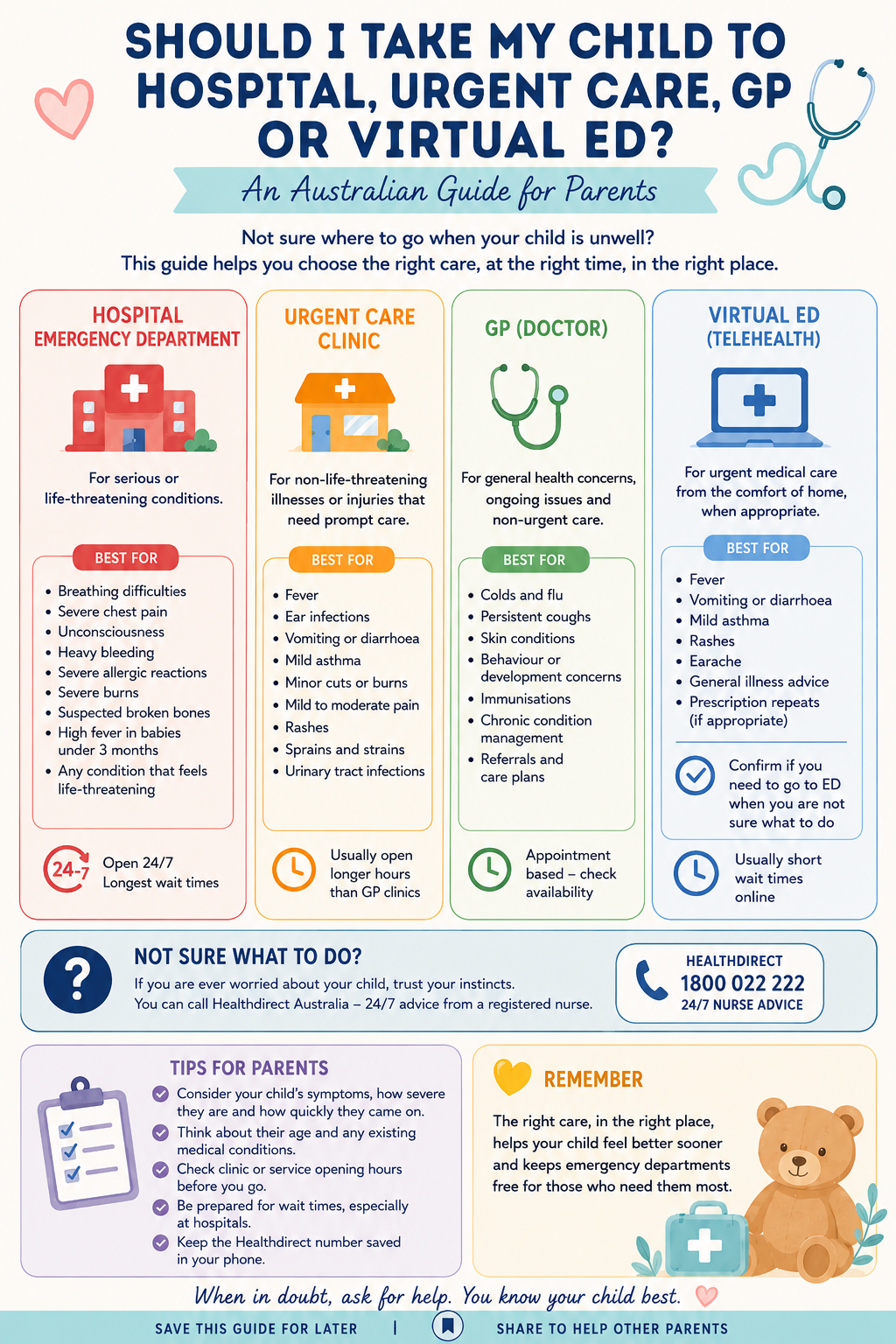
Going back to your GP
Sometimes the best next step is your regular GP — especially if they already know the history.
Parents often worry:
“Will they think I’m overreacting?”
But follow-up appointments are common.
Try saying:
“We were reviewed recently, but things are becoming harder to manage and we are unsure whether the plan still fits.”
Virtual ED
Sometimes parents are mainly asking:
“Do we need another review or are we okay to continue monitoring?”
Depending on your state, public Virtual ED services may help families think through next steps and where reassessment may make sense.
Not sure whether GP, hospital or Virtual ED is the best fit?
Read: Should I Take My Child to Hospital, Urgent Care, GP or Virtual ED? (Australia Guide)
Urgent care or hospital reassessment
Many parents feel nervous going back after already being reassured.
But reassessment is common when:
things have changed
home management feels harder
functioning is worsening
the original plan no longer feels realistic
parents feel increasingly unable to safely continue at home
A previous review was based on the situation at that time.
If circumstances change, reassessment may too.
What if my child was discharged from hospital but still seems unwell?
This can feel especially confusing.
Parents often think:
“Surely they would have kept us if something was seriously wrong.”
But hospital discharge reflects what was happening during that assessment.
Parents sometimes return because:
things changed after discharge
caring at home feels harder
they are struggling to sustain the plan
daily functioning has changed
they feel increasingly unsure or unsafe
A useful phrase can be:
“We were discharged a few days ago, but things feel different now and we are not sure whether the original plan still fits.”
What if my child is getting worse while waiting for a paediatrician?
Many Australian families wait months for specialist care.
A common misconception is:
“We just have to wait.”
But situations can change while waiting.
Parents sometimes seek reassessment when:
day-to-day functioning deteriorates
the situation feels increasingly unmanageable
caring responsibilities become harder to maintain
concerns escalate significantly from the original referral
Sometimes the biggest change is not symptoms — it is how manageable life has become. You may be dealing with school refusal, dangerous behaviours during car travel, violence and aggressive behaviours towards siblings. If developmental concerns are increasingly escalating at home the following guide may be useful: How to get a Developmental Paediatrician appointment in Australia
Waiting months for a specialist?
Read: What To Do While Waiting for a Paediatrician Appointment in Australia
Feeling like things are no longer manageable at home?
Read: When Should You Go to Emergency While Waiting for a Paediatrician? (Australia Guide)
What helps doctors reassess a child quickly?
You do not need a perfect explanation.
Simple context helps.
Try focusing on:
what changed
when it changed
what feels harder to manage
whether the original plan still feels realistic
A simple timeline can help:
“We were reviewed on Monday. By Wednesday things became much harder to manage and day-to-day functioning changed.”
Photos or short videos may sometimes help show changes over time when families are struggling to explain what they are seeing.
Frequently asked questions
My child is getting worse after seeing a doctor — should I go back?
Parents sometimes seek reassessment when things change, worsen, or become harder to manage than expected.
Doctor said it was viral but my child is worse — what now?
Try focusing on what changed since the last review and whether the original plan still feels workable.
Is it okay to seek a second opinion for my child?
Yes. Reassessment and second opinions are common when situations evolve or families feel uncertain about next steps.
What should I tell the doctor if my child is getting worse?
Keep it simple:
“Things feel different to when we were reviewed.”
Then explain what changed and what feels harder to manage.
Final thoughts
One of the hardest parts of parenting is deciding what to do when you have already sought help.
A review today does not lock in tomorrow’s plan.
Children change.
Family circumstances change.
Sometimes the question is not:
“Are we overreacting?”
but:
“Does this still feel manageable and consistent with the plan we were given?”
This article is intended for healthcare navigation only and does not replace medical advice. If you are worried about your child or feel unable to safely manage the situation at home, seek healthcare support.
