
When to Worry About a Rash on Your Child: What Australian Parents Can Do Next
A new rash can send parents straight to Google images trying to work out exactly what it is. But you do not necessarily need to identify your child's rash yourself before deciding what to do next.
A more useful first question can be: how is my child overall, and what level of healthcare assessment do they need?
This guide is not designed to diagnose a rash. Instead, it helps Australian parents think through the next step: whether their child may need emergency assessment, prompt medical review, a routine appointment, or ongoing observation with a plan to seek further help if things change.
The key idea
You do not need to know the name of the rash before deciding where to seek help. The rash is only one part of the picture; how your child looks, behaves and is changing matters too.
Your child has a rash: start with the whole child
Parents often focus on the colour, shape or location of a rash. Those details can be useful to a clinician, but the decision about what to do next is not based on the rash alone.
Before deciding where to seek help, consider:
How your child seems overall compared with their usual self.
Whether there are other symptoms, such as fever, breathing difficulty, vomiting, pain or marked lethargy.
Whether the rash appeared suddenly or is changing quickly.
Whether your child is becoming more unwell rather than improving.
Whether you have already sought medical advice and something has changed since that assessment.
When a rash may need emergency assessment
Some combinations of a rash and other symptoms warrant urgent medical attention. For example, Australian paediatric health services advise urgent assessment for a child who is very unwell, has difficulty breathing, has signs of a severe allergic reaction, or has a non-blanching rash (spots that do not fade when pressure is applied), particularly when associated with fever or significant illness.
If your child appears seriously unwell or you think the situation is an emergency, call Triple Zero (000) or attend an emergency department.
Important
Do not rely on an online rash guide or photographs to rule out serious illness. If you are concerned about how your child looks or behaves, seek appropriate medical assessment.
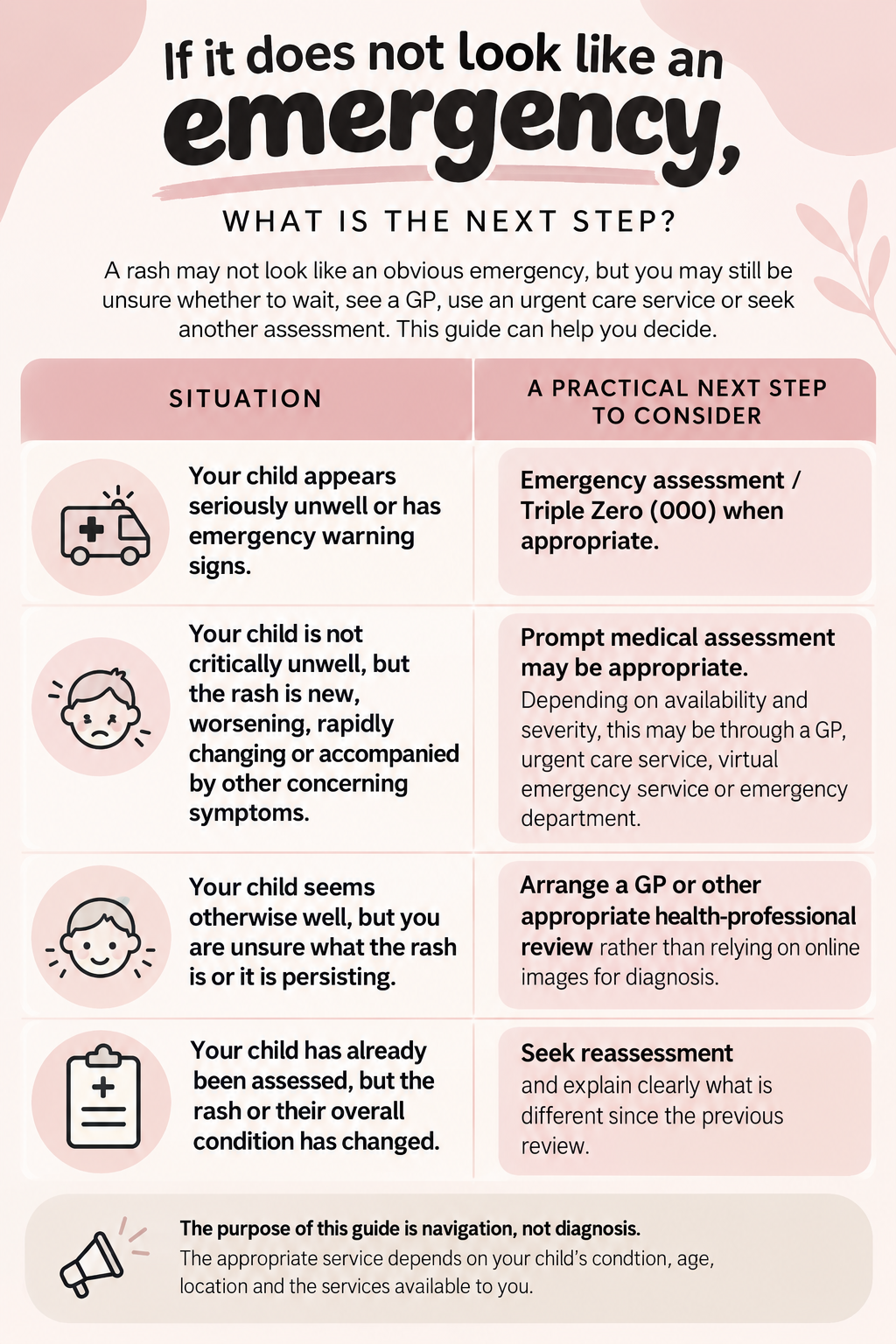
If it does not look like an emergency, what is the next step?
This is where many parents get stuck. A rash may not look like an obvious emergency, but you may still be unsure whether to wait, see a GP, use an urgent care service or seek another assessment.
What if my child has a rash but no fever?
The absence of fever does not identify the cause of a rash or automatically tell you whether it needs assessment. Instead of using fever alone as the deciding factor, look at the overall picture: how your child is behaving, whether the rash is changing, whether there are other symptoms and whether you are concerned.
If your child otherwise seems well but the rash is unexplained, persistent or worrying you, a GP or other appropriate clinician can assess it.
What information should you take to an appointment?
Rashes can change or disappear before an appointment. A short record can make it easier to explain what has happened.
Take clear photographs in good light, including a wider photo showing where the rash is located.
Note when you first noticed it and whether it has spread or changed.
Record any fever or other symptoms and when they occurred in relation to the rash.
Write down any recent illnesses, new medicines, foods, skin products or other relevant exposures.
Bring a current medication list and any relevant information from a recent medical assessment.
If your child was already reviewed, note exactly what has changed since then.
What if you have already seen a doctor but you are still worried?
A previous assessment reflects how your child looked at that point in time. Children can change, and new symptoms can develop.
If the rash is changing, new symptoms have appeared, your child seems more unwell, or your concern has increased, it is reasonable to seek reassessment. When you do, explain what has changed since the previous review rather than simply saying that the rash is still there.
For example: "We saw a doctor yesterday. Since then the rash has spread, she is much sleepier and she is drinking less." A clear timeline can help the next clinician understand why you have returned.
You do not have to diagnose the rash yourself
Searching photographs of childhood rashes can be tempting, but many different conditions can look similar. Skin tone, lighting, the stage of an illness and image quality can also make online comparisons misleading.
For parents, the more useful task is often not naming the rash but recognising when the situation has changed and knowing how to access the next level of care.
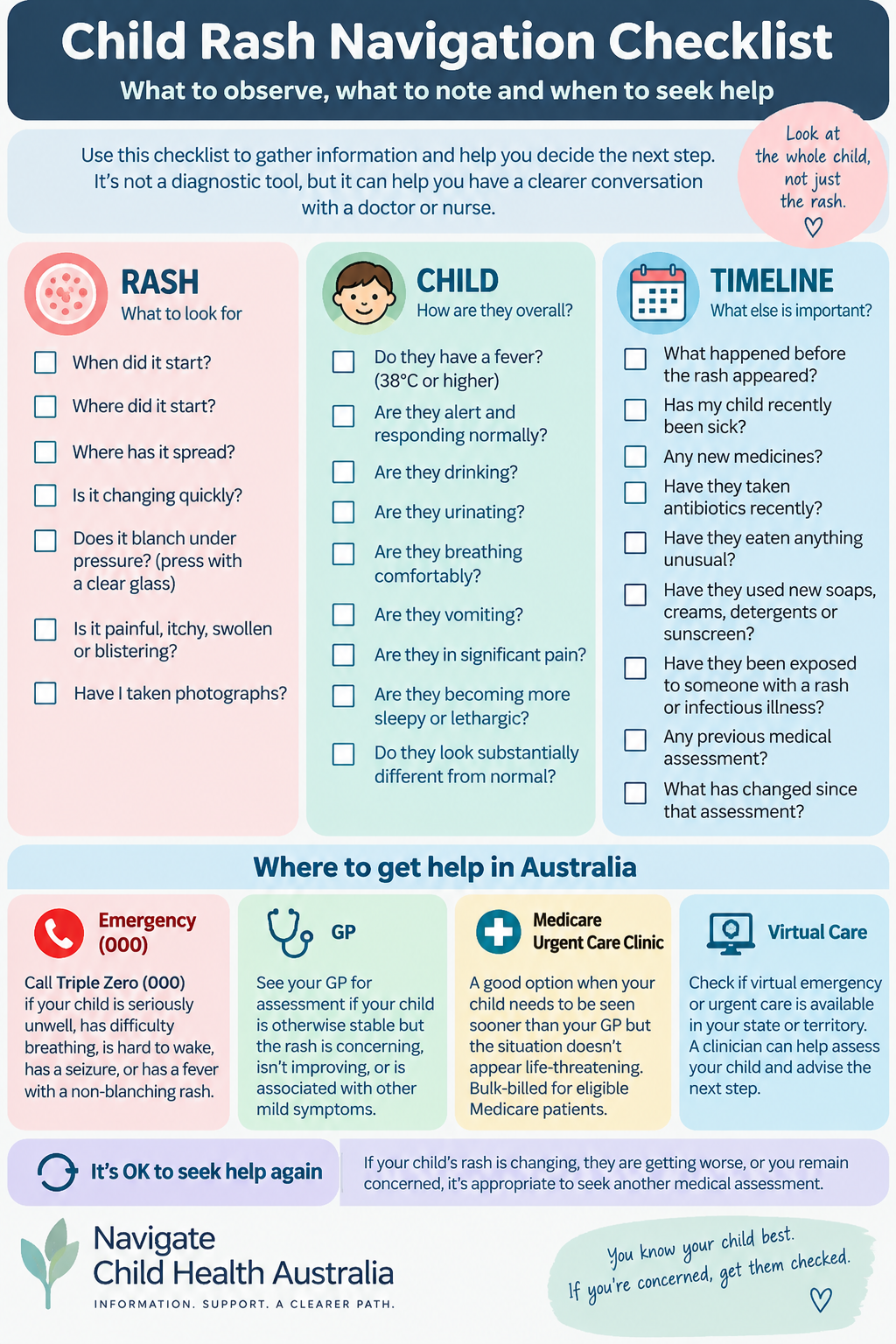
A simple rash navigation checklist
The bottom line
When your child develops a rash, you do not need to become an expert in childhood skin conditions before deciding what to do.
Focus first on your child as a whole, whether they are becoming more unwell, whether there are urgent warning signs and what has changed over time. Then choose the level of healthcare assessment that matches the situation.
And if your child has already been assessed but something has changed, seeking reassessment is a different decision from simply repeating the first visit.
Related guides on Navigate Child Health Australia
Website disclaimer
This article provides general health-navigation information for Australian parents and is not medical advice, diagnosis or a substitute for assessment by a qualified health professional. If you are worried about your child or believe they may be seriously unwell, seek appropriate medical care. In an emergency in Australia, call Triple Zero (000).
